
Fetal Alcohol Syndrome
Alcohol is the most common teratogen in the western world where it is socially acceptable to drink.
Features of FAS
Babies born with have a decreased birth weight and this lag is permanent. They also have very specific facial features that include a smooth philtrum, thin vermilion (top lip) , and small eyes and head (microcephaly). The brains of FAS patients are usually very small and usually they have a low intelligence with an IQ of 60. There are also skeletal problems including position of joints and distal bones in the hands. FAS can also cause hydrocephaly, cleft lip or spina bifida. There can be neurological disorders, such as epilepsy or less well defines neurological difficulties associated with behavior or hand eye co ordination. Later in life children can suffer with ADAH, learning difficulties and mental illness.
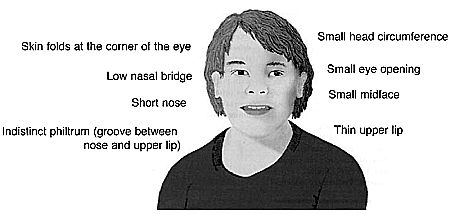
Image courtesy of https://upload.wikimedia.org/wikipedia/commons/9/96/FASkid.gif under the creative commons license.
Causes
By the early 1970s in was known that alcohol or its metabolites could act as a teratogen. The general opinion is that pregnant women should avoid alcohol entirely for the duration of the pregnancy although the exact effects of low levels are unknown. FAS only occurs when alcoholic mothers are consuming over 6units a day throughout pregnancy. At lower levels of 2-3 units a day babies often suffer with FAE (Fetal Alcohol Effects) which is a less severe form of FAS. Alcohol is known to disrupt neuronal migration. This with a combination of metabolites killing neurons may lead to the small brain.
Treatment
There are different approaches to treatment that aim to treat the different areas of the syndrome. Many of the neurological effects are permanent but a combination of behavioural therapies and medication is often used.